
Can a Bathroom Remodel in Tampa, FL Be Done Before Thanksgiving Guests Arrive?
The situations described here are composites drawn from the types of jobs and decisions we encounter regularly. Names and specific figures are illustrative.
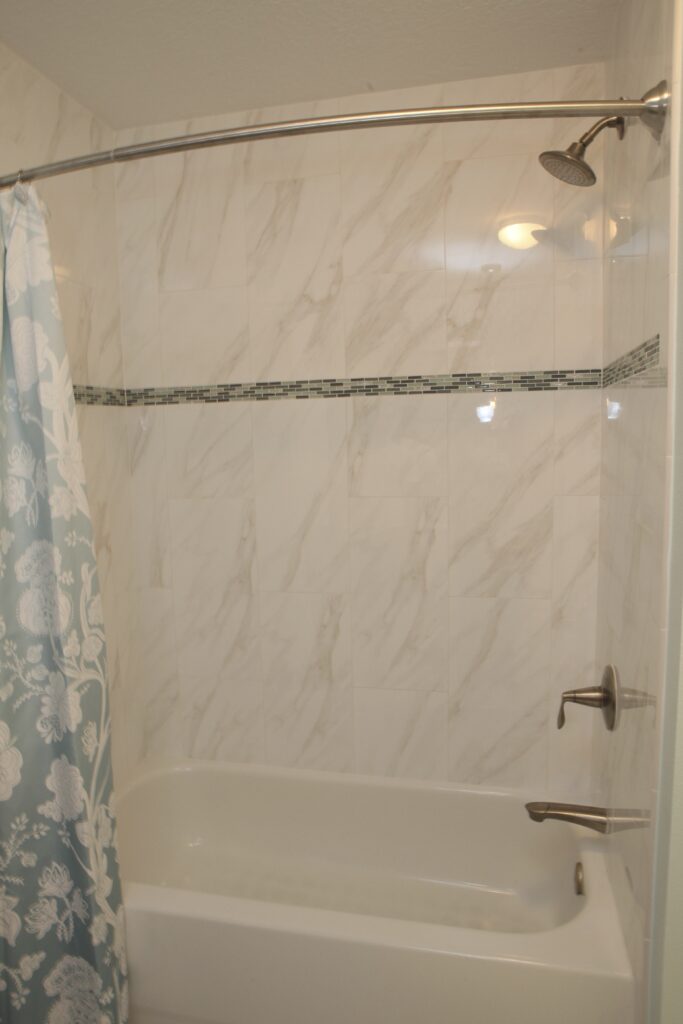
The call came in the second week of October, which is when a lot of these calls come in. A homeowner in Town ‘n’ Country had a 1970s block ranch with one hall bath that guests use, and her husband’s parents were flying in from Ohio for Thanksgiving week. The tub surround was original pink tile, the grout was dark in the corners, the toilet rocked, and there was a brown ring on the ceiling over the tub that had been there long enough that nobody noticed it anymore. She wanted a full bathroom remodel in Tampa, FL, done and cleaned up before the in-laws landed on the Saturday before the holiday.
That left about five and a half weeks. On paper, a guest bath remodel fits in that window. In practice, construction is only one piece of the calendar.
What the calendar looked like once we laid it out
The bathroom measured about five feet by nine: a tub-shower combo, a 30-inch vanity, and the toilet. The scope she had in mind was what most people picture: tear out the tile, new tub, new surround, new vanity and top, new floor, new fixtures. For a hall bath that size, our bathroom remodeling work in Tampa usually runs two to four weeks of construction once demo starts.
The problem was everything that has to happen before demo. She had not picked tile. She had not picked a vanity. A remodel that replaces the tub and moves even one supply line goes through the permit process, and the review time depends on the address and how busy the county is that month. Then the tile she ended up liking, a matte porcelain in a size the local supply houses did not stock, had a quoted lead time of about three weeks.
Here is how the two paths lined up on the calendar we sketched on the back of the estimate:
| Step | Full remodel now | Refresh now, remodel in January |
|---|---|---|
| Selections (tile, vanity, fixtures) | 1 to 2 weeks, rushed | Done over the holidays, no rush |
| Permit and material lead time | 2 to 4 weeks, overlapping | Ordered in December |
| Construction | 2 to 4 weeks | 2 days in November, 2 to 3 weeks in January |
| Earliest realistic finish | Mid to late December | Usable by mid-November |
| Bath usable for Thanksgiving | Unlikely | Yes |
If everything went right, the full remodel would finish around the second week of December. If one thing slipped, a back-ordered valve or a permit comment, the guests would be showering in a room with no tile on the walls. Promising Thanksgiving and missing it is worse for everybody.
The rule we used for what to touch in November
Once the full job moved to January, the question was what to do in the meantime. This is where people overspend: regrouting tile, painting the vanity, swapping the faucet. All of that goes in a dumpster six weeks later.
The rule we settled on was simple. A November item had to do one of two things: carry over into the January remodel without being torn out, or fix a problem that was actively making the room worse. Cosmetic work on anything scheduled for demo did not make the list. We use the same rule on punch list and honey-do visits when a bigger project is coming later.
Applied to this bathroom:
| November item | Illustrative cost | Survives January? |
|---|---|---|
| New exhaust fan, ducted outside, ceiling patch | $700 to $950 | Yes |
| New toilet, same location | $450 to $650 | Yes |
| Cut out and recaulk tub perimeter | $120 to $180 | No, but stops water getting behind tile |
| Grab bar at the tub | $150 to $225 | No, removed at demo |
| Regrout, paint vanity, new faucet | Skipped | Would be demolished |
The toilet was an easy call. It sits in the same spot in the January plan, it was rocking on a failed wax ring, and a new one carries straight into the finished room. It comes up and goes back down when the new floor goes in, which costs a little labor but not a second toilet.
The grab bar broke the rule, and we said so. Her father-in-law had a hip replaced in the spring, and the tub has a high wall. A bar into the tile wall would come out at demo in January. She wanted it anyway, and that seemed like the right place to spend money that would not last. Safety for a ten-day visit is a real reason. Making grout look whiter for ten days is not.
What was above the ceiling stain
The fan was the item that changed the job. The old unit rattled more than it moved air. We pulled it and found the flex duct was not connected to anything. It ran about three feet from the housing and stopped, lying on top of the insulation in the attic. For what looked like decades, every shower in that bathroom had been blowing warm, wet air straight into the attic.
That explained the brown ring on the ceiling. The insulation directly around the fan was matted down and damp to the touch, and the back side of the drywall around the cutout had dark spotting across an area a little smaller than a dinner plate. The roof deck above it was dry and solid, which was the good news.
Venting a bath fan into the attic is not a gray area. Florida’s residential code requires exhaust air to be discharged to the outdoors, and a Building Officials Association of Florida interpretation has gone further and said that a soffit does not count as outdoors either. In a hot, humid Tampa attic, that moisture condenses on the back of the ceiling drywall and sits there.
The EPA’s guidance on mold is consistent on one point: the moisture source has to be fixed, and wet materials need to be dried quickly, within 24 to 48 hours, to keep mold from taking hold. A ring that has been wetted on and off for years is past that window. The affected area here was small, well under the ten-square-foot size the EPA describes as manageable without a specialist, so we cut out a section of drywall about two feet square, bagged the wet insulation around the fan, let the cavity dry out with the attic hatch open for a day, and then patched.
Sizing the fan and running the duct
The Home Ventilating Institute’s guideline for bathrooms under 100 square feet is one CFM of fan capacity per square foot of floor. A five-by-nine bath works out to about 45 CFM. We went with an 80 CFM fan rated for use over a tub, because the duct run to the gable end wall was about fourteen feet with one bend, and every foot of duct and every elbow takes some airflow away from the number printed on the box.
We ran rigid duct for most of that length, sloped slightly toward the exterior so any condensation inside the duct drains out instead of back toward the ceiling, and terminated at a wall cap with a damper on the gable end. The existing circuit and switch were reused, which kept this inside the scope of a fixture replacement rather than new electrical work.
The fan, duct, and ceiling patch all stay through the January remodel. It was also the one piece that would have been a mistake to skip, refresh or no refresh.

The questions that came up while we worked
Most homeowners in this spot ask the same few things, and she asked all of them.
The first was why we would not just regrout the tub surround so it looked fresh. The answer was cost against lifespan. Regrouting a full tub surround properly is a day of work, and that tile was coming off the wall in about eight weeks. Cutting out the old caulk at the tub line and running a fresh bead of silicone did the part that mattered, which was keeping shower water from wicking behind the tile while the guests were there. We followed the cure time on the tube, which meant asking the household to skip that shower for a full day.
The second was whether she could hire someone cheaper for the November part, since it was small. A lot of Tampa homeowners know Florida lets unlicensed workers do minor jobs under $2,500. What the statute also says is that the exemption does not apply when the small job is part of a larger or major operation, or when the work needs a permit. Here the November work was openly the first phase of a remodel, and we did not want the fan and toilet installed by one party and the rest of the room by another with no single warranty covering how they tie together. For truly standalone fixes, our handyman services in Tampa handle them as their own visit, and that is a different situation.
The last was whether she should have caught this sooner. Probably not. From inside the room, a disconnected fan sounds like any weak fan, and ceiling stains usually get blamed on the roof. We have seen similar things turn up during hurricane prep visits when someone finally climbs into the attic for another reason.
How November and January actually went
The November visit took two days. Day one was the fan, duct, drywall cut-out, and attic cleanup, with the cavity drying overnight. Day two was the patch, ceiling paint over the whole ceiling so the patch did not show, the toilet, the grab bar, and the recaulk. The total landed at about $1,750 for the refresh, inside the range we had given her.
The in-laws came and went. The bath was not pretty. The pink tile was still pink. But nothing rocked, nothing leaked, the fan cleared the mirror in a few minutes, and the ceiling was white.
Over the holidays she picked her tile and vanity without a deadline over her head, and the vanity she chose was not the one she would have rushed into in October. The permit went in the first week of December. Demo started the second week of January, and the remodel ran about two and a half weeks, a little faster than it would have been in the fall because the ceiling, fan, and toilet were already done and nothing had to wait on a back-ordered part. The Carrollwood walk-in shower conversion follows a similar sequence.
The one regret she mentioned was the grab bar coming out in January. We had already put blocking in the new wall before the backer board went up, so the permanent bar went back in the same afternoon the tile was finished. That was planned, but it still felt like paying twice, and she was right that it was.
What the timing taught us
A holiday deadline compresses the part of a remodel that people do not think about, the selections and permits and lead times, much more than it compresses the construction. When the calendar does not fit, the useful question is not how to rush it. It is which pieces of the room are worth fixing now because they will still be there afterward, or because leaving them alone is causing damage.
In this house that came down to a fan, a toilet, a bead of caulk, and one grab bar that was knowingly temporary. If a holiday visit is pushing you toward a bathroom remodel in Tampa, FL on a short clock, it can help to sort your list the same way before deciding what the visit actually requires.
If you are weighing a full guest bath project after the holidays, our Tampa bathroom remodeling page outlines how those jobs are scoped and scheduled.
Sources
- Florida Statutes Section 489.103, Exemptions (2025), The Florida Senate
- Building Officials Association of Florida, Interpretation #8676: Exhaust discharge terminated in a soffit
- A Brief Guide to Mold, Moisture and Your Home, U.S. Environmental Protection Agency
- Bathroom Ventilation, Home Ventilating Institute
