
Is It Time for Deck Repair in Tampa, FL When One Soft Board Turns Out to Be a Rotted Ledger?
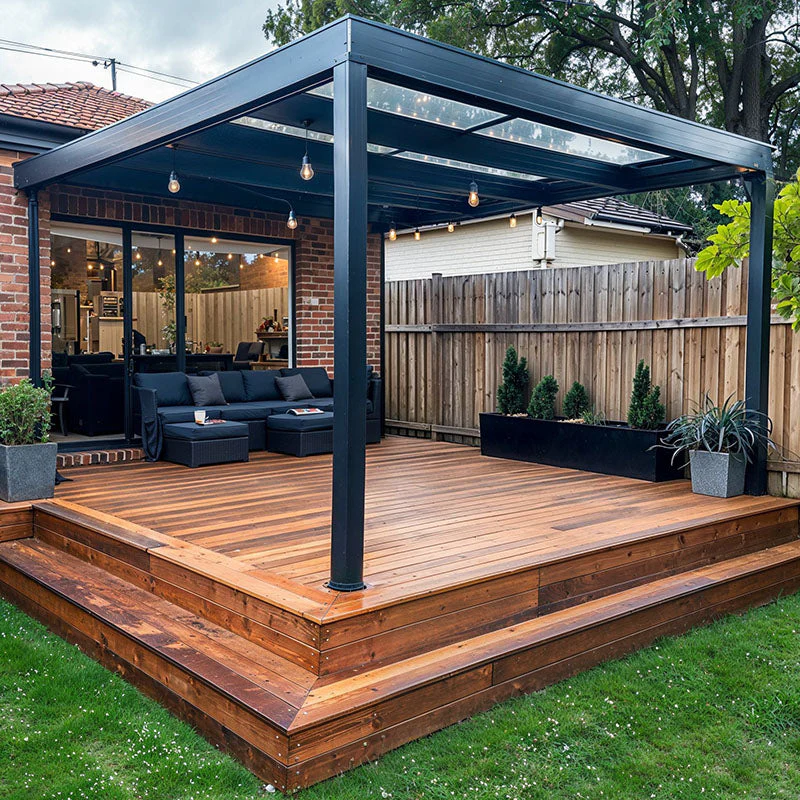
The situations described here are composites drawn from the types of jobs and decisions we encounter regularly. Names and specific figures are illustrative.
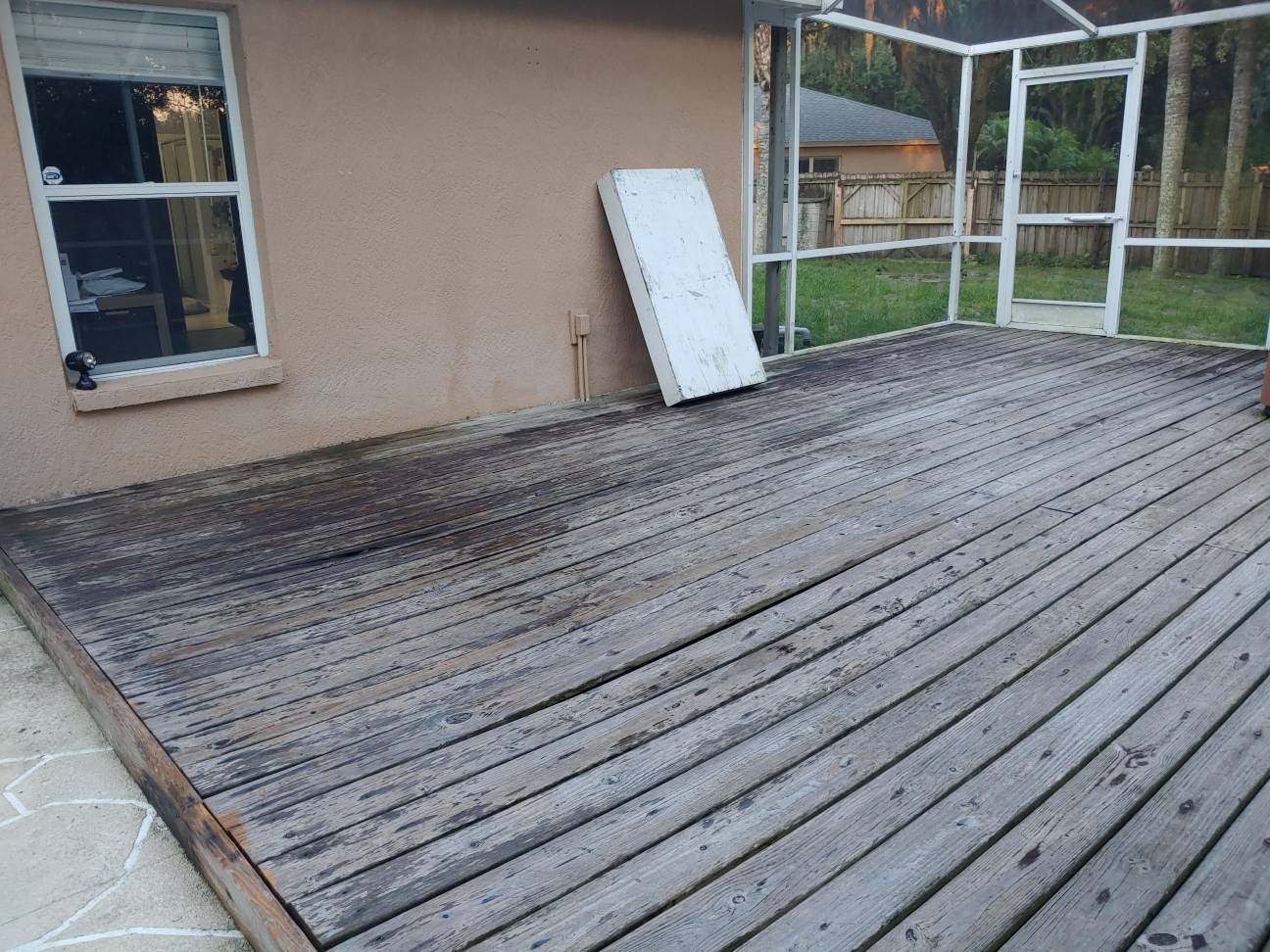
It started with a single board near the back door. The homeowner, who had a twelve-year-old pressure-treated deck behind a 1950s bungalow, felt it flex under his foot while carrying out the trash. He had been planning to stain the deck before the holidays, so he went to get a screwdriver to check how bad the surface really was. The tip slid in almost an inch. That kind of discovery is how many people end up researching deck repair in Tampa, FL on a Saturday afternoon with a half-open can of stain on the porch.
Why wood decays faster here
Florida is not kind to outdoor wood, and the reason is documented. The USDA Forest Products Laboratory publishes a climate index for decay hazard on wood exposed above ground. The southeastern United States sits in the highest-hazard zone in the lower 48, because warm temperatures and frequent rain keep wood wet at the same time it is warm enough for fungi to grow. Treated lumber slows that process but does not stop it, and cut ends, drilled holes and places where water can sit are where the protection is thinnest.
In this illustration the first soft board was just a symptom. When the homeowner pulled up three boards, the joists underneath looked sound near the middle of the deck. Closer to the house, the wood was darker and spongy. Water had been getting into the connection between the deck and the house for years, and nobody could see it because the boards sat on top.
The ledger is the part that matters
A ledger is the board bolted to the house that carries one side of the deck. It is the single most important connection on an attached deck, and also the one most likely to be hidden. Under the International Residential Code, which Florida’s building code is based on, the ledger must be attached to the house’s band joist with bolts or lag screws, not nails. The tip of a lag screw has to pass fully through the band joist, and the fasteners are staggered in a pattern set out in the American Wood Council’s prescriptive deck guide, known as DCA 6. The ledger also needs flashing or sealant to keep water from getting between the deck and the house wall.
Those details exist because attached decks fail at the ledger. A deck that pulls away from a house does so suddenly, usually when it is loaded with people. The homeowner in this story did not know any of that. He knew only that when a handyman pulled the old flashing back, the ledger board behind it crumbled where the screwdriver touched it, and the band joist of the house showed staining that had to be checked before anything else was done.
Repair, or rebuild?
The question became whether this was a repair or a rebuild. Replacing a few boards is a repair. Replacing a ledger, flashing and joists near the house is closer to a structural rebuild, and that is where the answer depends on how much of the deck is still sound. The handyman who looked at it gave the homeowner a simple test: if more than a third of the structure needs to come out, it is usually cheaper and safer to rebuild the whole frame than to splice new wood into old. The surface boards, the railing and the stairs can often be kept.
He also raised the question the homeowner had not thought to ask, which was whether this work needed a permit. Permit rules for decks vary by jurisdiction and by scope. A deck attached to a house, or one more than 30 inches above grade, is commonly something the building department wants to see, and the City of Tampa and Hillsborough County each have their own requirements. The way to settle it is a call to the local Construction Services office before any structural work starts, because an unpermitted structural repair can cause trouble later at resale or in an insurance claim. Our deck building services in Tampa page explains how we usually handle that conversation.
What the repair looked like
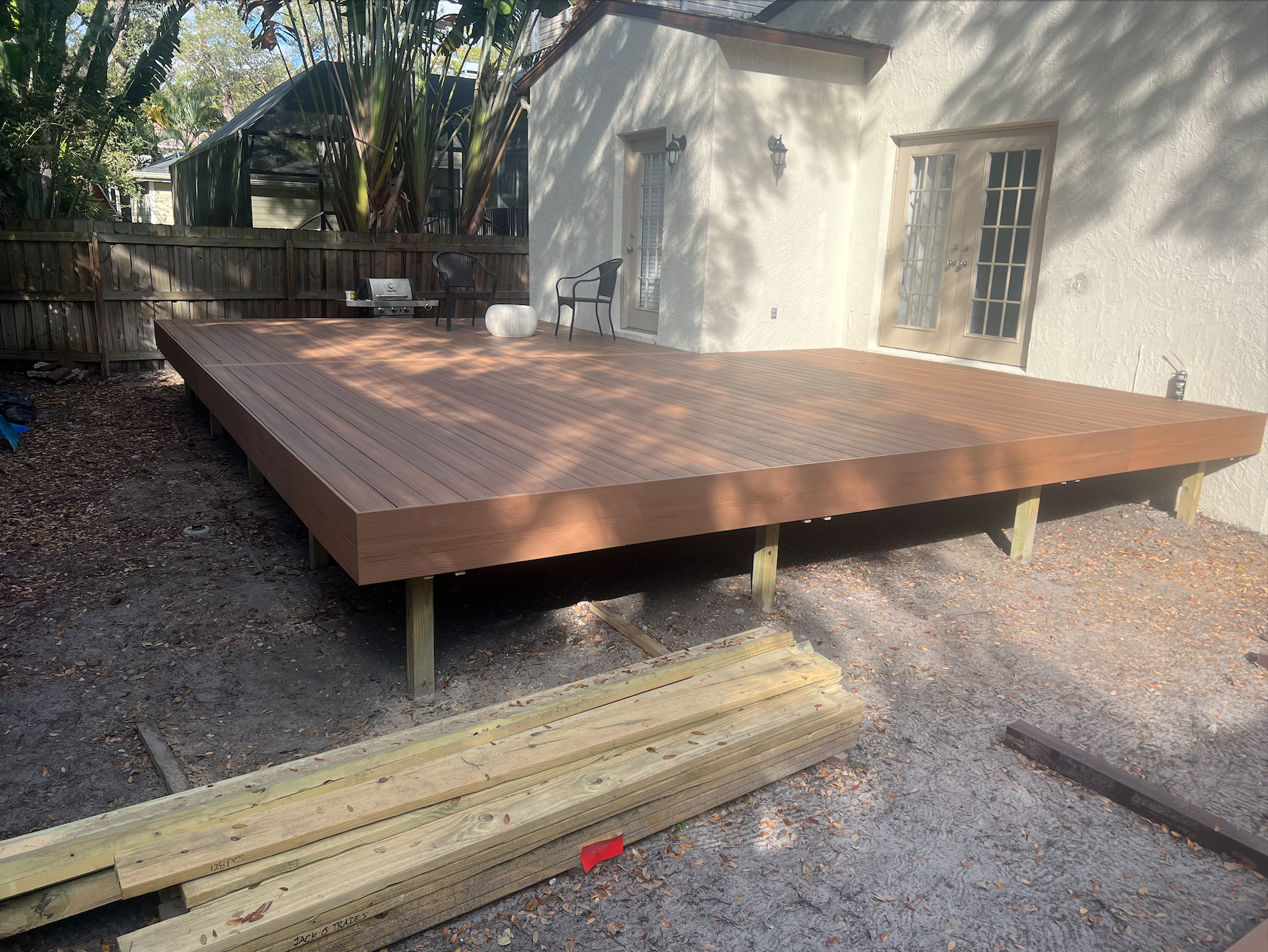
In the end the homeowner chose a partial rebuild. The crew removed the surface boards, cut out the failed ledger and replaced it with a new treated ledger bolted through the band joist, with flashing lapped correctly over the top so water would run away from the house and not behind the board. Two joists nearest the house were sistered with new lumber, and the rest were left alone after being probed and found sound. New joist hangers went in, and stainless or coated fasteners replaced the old ones that had rusted in the humid air. Using hardware rated for treated lumber matters, because the chemicals in treated wood corrode plain steel.
In this illustration the structural work, without new surface boards, ran to a few thousand dollars, with the new decking and stain on top of that. A homeowner in that position will usually say the same thing afterward: the price was not what surprised him, it was how long the problem had been there. Small repairs like replacing a few boards or fixing railings usually fall under the sort of tasks a handyman in Tampa handles, while the structural work should be done by someone willing to talk through permits and code.
What to look for before it gets that far
The practical lessons are simple and they came out of the job itself. Probe boards with a screwdriver near the house and around the posts, since those are the first places water collects. Look at the ledger from underneath and check that flashing is present. Check whether the deck moves when you push on it from the side. Look for rust streaks on fasteners, which show where moisture is sitting. And pay attention to the underside of the deck after a heavy rain, where water stains tell the story that the top surface does not.
Fall is a reasonable time to do this in Tampa. The summer rainy season is over, the wood has had weeks of steady heat to dry, and a homeowner can see what actually decayed before stain or sealer hides it. We described a similar pre-storm check in a story about a Tampa handyman’s hurricane prep list.
What the story leaves behind
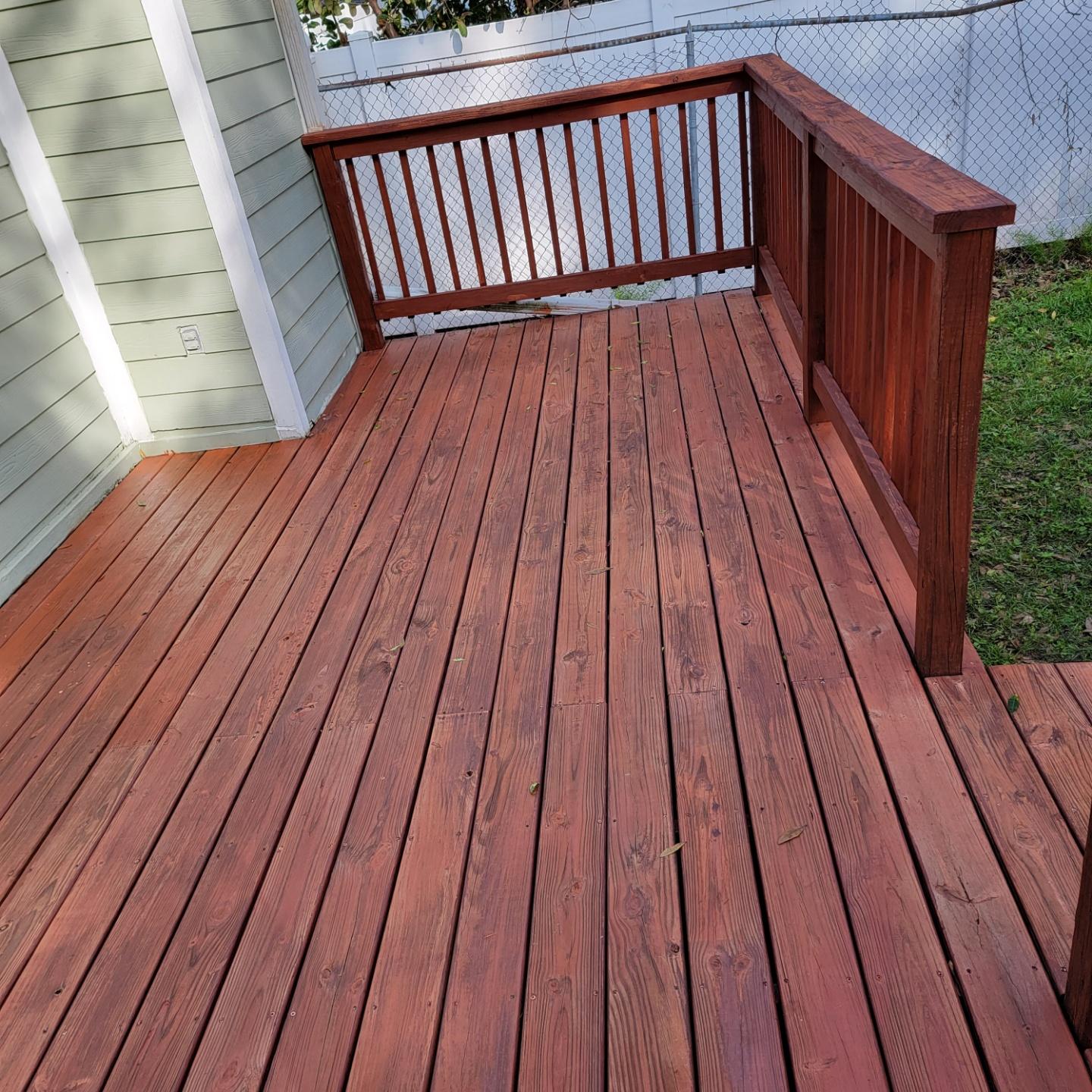
One soft board did not mean the deck was finished, and it did not mean the deck was fine. It meant someone needed to look at the connection to the house before anything else. For anyone weighing deck repair in Tampa, FL, the order of questions matters: is the ledger sound, is the flashing in place, how much of the frame is still good, and does the work need a permit. The stain comes last.
If you’re looking for home repair help in Tampa, you can reach out here.
Sources
- USDA Forest Service Research: Decay Hazard (Scheffer) Index Values Calculated from 1971-2000 Climate Normal Data
- American Wood Council: DCA 6, Prescriptive Residential Wood Deck Construction Guide
- International Code Council: Building Safety Journal, Is Your Deck Safely Connected to Your House?
- Florida Building Commission: Florida Building Code, 8th Edition (2023)
- City of Tampa: Construction Services Division
