
Which Pre-Listing Repairs in Tampa, FL Are Worth Doing on a 31-Item Inspection List?
The situations described here are composites drawn from the types of jobs and decisions we encounter regularly. Names and specific figures are illustrative.
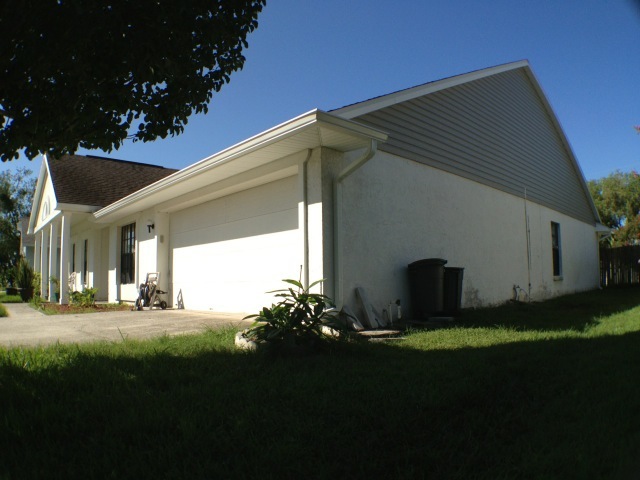
The house was a 1978 concrete block ranch in Temple Terrace, and the owners wanted to know which pre-listing repairs in Tampa, FL were worth doing before a mid-January listing. They had a pre-listing inspection report with 31 items, an 18-year-old shingle roof and the original 1990s kitchen. Their first plan was to repaint every room and replace the kitchen counters, about $14,000 of work. The fact that shaped the answer: a house this age will almost certainly get a four-point inspection from the buyer’s insurer, because Citizens Property Insurance requires one for homes more than 20 years old.[1]
What the 31-item report actually said
Inspection reports read like everything is equally urgent. They are not. This one had a slow drip at the water heater supply line, a missing cover on a junction box in the garage, a breaker with two wires under one screw, and a brown ring on the hallway ceiling under the spot where the roof had been patched in 2022. The rest was the ordinary wear of a house that has been lived in: two interior doors that rubbed the jamb, a loose stair handrail to the back patio, failing caulk at the hall tub, torn screens on the lanai, a dead GFCI outlet in the guest bath, chipped trim, and a long list of nail pops and scuffs.
The owners had read the report the way most people do, starting at item one and getting more discouraged by item twelve. Their instinct was to spend on what they could see from the front door: fresh paint everywhere and new counters. That instinct is not wrong for every house. It just did not match what the report was telling them about this one.
Why the four-point inspection moved to the top
Before a buyer can insure an older house, an inspector usually looks at four things. Under Citizens’ published rules, a Florida-licensed inspector reports the age, type and condition of the electrical system, plumbing, heating and cooling, and the roof.[1] Citizens also states that serious hazards or deficiencies, with exposed wiring, active leaks and evidence of leaks given as examples, should be repaired before an application for coverage is submitted.[1] Private carriers set their own underwriting rules, but the four categories are the same ones a buyer’s agent will be watching.
Read that way, four of the 31 items were in a different class from the rest. The water heater drip was an active leak. The open junction box was exposed wiring. The double-tapped breaker was an electrical deficiency an inspector is likely to note. The ceiling stain was evidence of a past leak, even though the roof had been repaired. None of them were expensive. All of them were the kind of thing that can stall a buyer’s insurance quote three weeks before closing, which is when sellers have the least room to negotiate.
The roof was the other piece the owners were worried about. Citizens’ rule for shingle roofs kicks in at 25 years, when the roof needs documentation of at least five years of remaining useful life.[1] At 18 years, this roof was not there yet. That did not make it new, and a buyer would still factor its age into an offer, but it took a full replacement off the pre-listing list.
How the list got split into three piles
We walked the house with the report in hand and put every item into one of three groups. Fix it because an insurance inspector will see it. Fix it because a buyer will see it on the first showing and it is cheap. Or leave it, disclose it if it needs disclosing, and let the price carry it. Here is how the main items lined up.
| Item from the report | Pile | This job’s cost (illustrative) |
|---|---|---|
| Water heater supply drip, open garage junction box, double-tapped breaker | Insurance inspector will see it | About $650, electrical items by a licensed electrician |
| Hallway ceiling stain from the 2022 roof leak | Insurance inspector will see it, and it gets disclosed | About $450 after a moisture check |
| Sticking doors, loose handrail, tub caulk, dead GFCI, lanai screens, trim and nail pops | Buyer will see it on a showing | About $2,800 over two crew days plus paint touch-up |
| 1990s kitchen counters, 18-year-old roof | Leave it and let the price carry it | $0 before listing |
The second pile is where most of the money went, and it is also where a punch list visit that clears several small repairs in one day earns its keep. Two crew days handled the doors, the handrail, the caulk, the screens, the GFCI swap and the trim. The ceiling got its own visit, because the stain could not be painted over until a moisture meter confirmed the drywall behind it was dry. It was. The stained section was sealed with a stain-blocking primer and the ceiling was painted wall to wall so the patch would not show as a brighter square. Our interior painting crew in Tampa handled that and the touch-ups in the two bedrooms with the worst scuffs.
Where the $2,500 line came into it
Halfway through the walk-through, the owners mentioned that a neighbor’s handyman had offered to do “the small stuff” for cash, one item at a time. That is a common offer around a listing, and it runs into Florida law. The state’s exemption for unlicensed work covers jobs of a casual, minor or inconsequential nature where the total contract price for labor, materials and everything else is under $2,500. The exemption does not apply when the work is part of a larger operation, or when a larger job is divided into contracts under $2,500 to get around the rule.[2] A pre-listing list totaling close to $4,000 is one operation, not eight small ones.
“Florida’s exemption for unlicensed work stops at $2,500 for the whole job, labor and materials together, and splitting a bigger job into smaller invoices does not change that.[2] We are a licensed contractor, so a seller’s whole list can go on one written quote.”
Logan Steege, Owner, Jack O’ Trades
The owners went with one written quote for the full list. The two electrical items on it were handled by a licensed electrician we coordinate with. That kept the paper trail simple, which matters more than it sounds when a buyer’s agent asks who did the repairs and whether there are receipts.
What had to be disclosed anyway
Fixing the ceiling did not erase the history behind it. Florida has required sellers to disclose known defects since the Florida Supreme Court decided Johnson v. Davis in 1985: when a seller knows of facts that materially affect the value of the property, which are not readily observable and not known to the buyer, the seller has a duty to disclose them.[3] The 2022 roof leak and its repair went on the disclosure, along with the date and the roofer’s invoice. A fresh ceiling with a documented repair behind it reads very differently to a buyer than a fresh ceiling with no explanation.
There is also a separate flood form now. Florida law requires a seller of residential property to give the buyer a flood disclosure at or before the time the sales contract is signed, covering whether the seller knows of flooding that damaged the property during their ownership, whether they filed a flood insurance claim, and whether they received assistance for flood damage.[4] An update that took effect October 1, 2025 added the question about known flooding and widened the assistance question beyond federal aid.[5] This house had never flooded, so the form was quick. For owners near the Hillsborough River who took water during a recent storm, it is not quick, and it is worth knowing about before an offer comes in rather than after.
The questions that came up along the way
The owners asked whether they should just replace the kitchen counters anyway, since every listing photo starts in the kitchen. Our answer was that it depends on what the house is competing against. If the comparable listings nearby all have updated kitchens, dated counters will show up in the offers either way. If they do not, a clean, working 1990s kitchen with new caulk and tightened hinges usually photographs fine. We wrote more about that tradeoff in which renovations add the most value in Tampa.
They asked whether selling as-is would be simpler. It can be, but as-is does not remove the disclosure duty, and it does not stop a buyer’s insurer from asking for a four-point. A leak or open wiring still shows up on that report. As-is mostly changes who pays to fix it and at what discount.
They also asked whether they should get a second inspection after the repairs. For a list this size, the receipts and photos of each repair were enough. A re-inspection makes more sense when the repairs involve the roof, structure or a major system.
And they asked, more than once, whether they were making a mistake by not doing more. Some sellers decide midway that they would rather stay and remodel than sell, and that is a different conversation; it is the one in whether to renovate or move in Tampa. These owners were moving either way.
How the ten weeks played out
Late October through December is a workable window in Tampa for this kind of list. The work is mostly indoors, the exterior items like screens and the handrail are easier outside of summer afternoon storms, and the holidays create a natural deadline. This is roughly how the schedule ran.
| When | What happened |
|---|---|
| Last week of October | Walk-through with the report, items sorted, written quote sent |
| First half of November | Water heater line, junction box cover and breaker corrected |
| Mid-November | Two punch list days: doors, handrail, caulk, GFCI, screens, trim |
| Early December | Moisture check, ceiling primed and painted, bedroom touch-ups |
| Early January | Receipts and repair photos handed to the listing agent, house photographed |
The total came in around $3,900 against the $14,000 they started with. The owners were not entirely comfortable leaving the counters, and that discomfort did not go away. What they had instead was a house where the four-point items were already handled, the walk-through items were already gone, and the one known defect had paperwork behind it. For the smaller jobs on a list like this, our handyman services in Tampa page lists the typical items a single visit covers.
What this house showed about sorting a list
An inspection report is a list of observations, not a list of instructions. On an older Tampa house, the items that touch the roof, wiring, plumbing and HVAC carry more weight than their price suggests, because they are what a buyer’s insurer will ask about. The cosmetic items matter less than sellers expect, and the large cosmetic projects matter least when the listing is only weeks away. If a house is newer than 20 years, or the report is short, the sorting looks different, and some sellers will reasonably decide to do more.
What stayed with us from this one was how much of the owners’ worry came from reading 31 items as 31 problems. Once the list was in three piles, the decisions were mostly obvious. For anyone weighing pre-listing repairs in Tampa, FL, that sorting step is usually where the real savings are.
If you have a pre-listing list of your own, you can see how our punch list and honey-do service handles it here.
Sources
- Inspections (Four Point and Older Roofs), Citizens Property Insurance Corporation (2026)
- Florida Statutes s. 489.103, Exemptions, The Florida Legislature (2026)
- The Return of the Pink Panther or Johnson v. Davis, Redux, The Florida Bar Journal
- Florida Statutes s. 689.302, Disclosure of flood risks to prospective purchaser, The Florida Senate (2025)
- Florida Expands Flood Disclosures, Florida Realtors (2025)
