
When Does an October Exterior Painting in Tampa, FL Actually Beat a Spring Repaint?
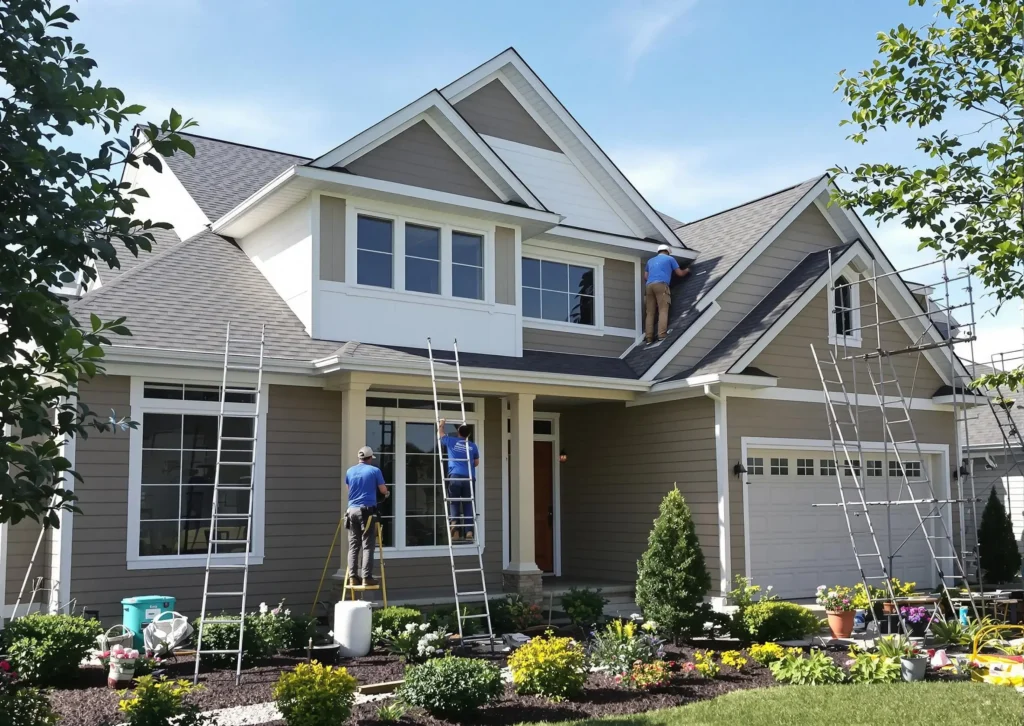
The situations described here are composites drawn from the types of jobs and decisions we encounter regularly. Names and specific figures are illustrative.
Most homeowners in the Tampa area think about exterior painting in Tampa, FL the same way they think about roof work — a spring project. Something to book in March, get done in April, and forget about by summer. That timing is not wrong for a lot of surfaces. It is wrong for stucco on a west-facing wall in a neighborhood like Brandon where afternoon summer humidity sits at a hundred percent for four straight months.
A Brandon homeowner called in early October about repainting the exterior of her 2007 stucco house. She had wanted to book it in April but had put it off because the roof and pool cage had needed money first. Her sister in Sarasota told her to wait for March. She was ready to write the check now. What she wanted from the phone call was permission to either move forward or wait.
Where the October call usually starts
The reason exterior painting in the Tampa area sits in an awkward spot on the calendar is that our real dry window is short. April and May work — humidity is manageable, afternoon storms are not yet daily, temperatures are workable. June through mid-September is the wrong window for anything but interior work. Late September through early December opens up again — humidity finally drops, afternoon storms taper off, and the temperature is workable through the whole day, not just the morning.
That fall window has one advantage over the spring window that most homeowners never think about. In spring, whatever damage the previous summer did to the paint has had six months to dry out but only slightly recover. In fall, it has just come off the worst three months of the year. What we see on a stucco wall in October is the actual condition — cracking that peaked during rainy season, mildew that got fed by August humidity, expansion joints that finally showed themselves. If we paint in October, we know exactly what we are painting over. In April, some of that damage is masked by cooler air and lower humidity.
What her walls actually showed
The exterior of her house had four distinct problems. The west wall had two hairline stucco cracks that had opened up over the summer — one about three feet long, the other about eighteen inches. Both were tracking along the exact line where a horizontal joint met a vertical corner. Standard rainy-season expansion. The south wall had a mildew colony the size of a dinner plate on the shady side under her patio overhang. The north wall was clean. The east wall had chalking — the old paint was leaving powder on her fingertips when she ran a hand across it — because the previous paint job had been an economy grade that had degraded five years faster than a mid-tier product would have.
None of that was catastrophic. All of it needed to be handled before the next April, because come spring, the mildew would spread, the cracks would widen, and the chalking would become a paint adhesion problem that would cost her a second job in three years. The right time to fix these was in the current window, before the winter rain patterns started refeeding what August humidity had grown.
The decision point on timing
Two paths were on the table. The first: paint in October. Pressure wash the entire exterior, treat the mildew with a fungicidal cleaner, cut out and re-tool the two stucco cracks with elastomeric patch compound, apply a full masonry primer to the chalking wall, and finish with a mid-tier acrylic elastomeric top coat rated for Florida sun exposure. Total project four to five days. Total cost landed at $6,200 for the whole exterior.
The second: wait until March. Same scope. But by March, the mildew would have spread down the shady side of the patio wall. The cracks would have opened another quarter inch each. The chalking would have gotten worse. She would still need to pressure wash, but she would need more crack repair, and the mildew treatment would take a longer dwell time. Same crew, more prep, higher cost — probably $7,400 to $7,800 by the time it was all said and done.
The March waiting cost was not just the extra dollars. It was that she would be booking into a season where every Tampa homeowner is trying to book their spring exterior work. Any date in April or early May would already be double-booked by late February. If she wanted a March or April slot, she would need to sign in October anyway. She might as well just do the job in October.
The pause where homeowners ask about paint grade
Most Tampa homeowners ask a version of the same question at this point. Which paint. The honest answer is that the paint decision matters more here than in almost any other climate in the country. A ten-dollar-per-gallon exterior paint on a Tampa stucco wall lasts four to five years. A mid-tier fifty-dollar-per-gallon elastomeric product lasts nine to twelve. A top-tier eighty-dollar-per-gallon product lasts twelve to fifteen. The per-year cost of the mid-tier product is cheaper than the economy product, because the labor to repaint is what costs money, not the paint itself.
The second question is usually about pressure washing intensity. Homeowners assume that a stronger blast strips more paint and gives a cleaner surface. It also strips more of the underlying stucco skin, which shortens the wall’s life. Correct pressure for stucco exterior prep in Tampa is between 1,500 and 2,000 PSI with a wide fan tip. Higher than that starts damaging the stucco face. Anything above 2,500 on a residential stucco wall is aggressive and unnecessary.
What actually happened
She approved the October job on a Wednesday. Crew showed up the following Monday morning. Full house pressure wash and mildew treatment took a day and a half. Crack repair and priming took another day. Two coats of the mid-tier elastomeric went on across the following two days. The whole job wrapped on Friday afternoon. Cleanup, tape removal, and touch-up on Saturday morning. She got a written twelve-year warranty on the coating.
The house looked the way she had wanted it to look for six years. She sent a photo the following March, after the first heavy spring rain. The wall was clean, the cracks were sealed, the mildew had not come back. The color she had picked — a warm neutral, one shade darker than her sister’s Sarasota stucco — had held its saturation through the winter with no fading.
Where the story usually ends
The point I want a reader to sit with is that “wait for spring” is a general rule that has stopped applying cleanly to a lot of Tampa exteriors. It applied when Tampa summers were slightly less brutal, when rainy season was slightly shorter, and when mid-tier paint products were less capable. In the current climate, the October through early December window is often stronger than the March through May window for exterior work. Not always. But often enough that the reflex to wait for spring is worth questioning.
The test we run with homeowners on the phone is usually two questions. Has your wall showed new cracks or mildew colonies over the past summer that were not there in April? And is your current paint chalking, meaning the surface is powdering onto anything that touches it? If either box is checked, waiting until spring makes the job bigger, not smaller. If neither is checked and the paint still looks fresh, spring is fine.
For homeowners considering the fall window for exterior painting in Tampa, FL, the honest answer usually comes down to what condition the walls are in coming out of rainy season — not what the calendar says. If you are weighing whether October beats spring for your specific house, our interior painting services page covers a related version of this decision for the inside work, our handyman services page covers the small stucco patch and trim work that often ships with a repaint, and our home improvement overview walks through the bigger scope for homeowners who want to combine exterior painting with an outdoor project.
For a related look at how Tampa humidity actually changes indoor project timing, our post on the Seminole Heights homeowner who moved a repaint indoors in July covers the same seasonal decision from the interior side.
